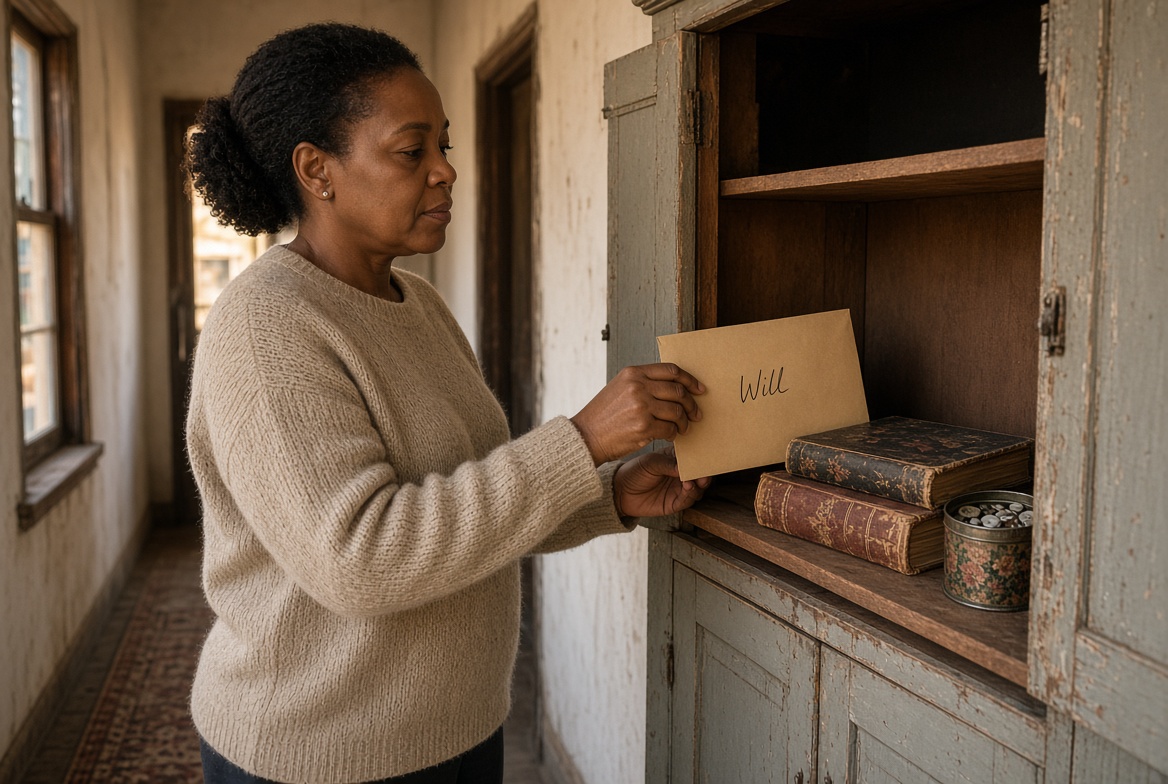
On 27 September 2026, Nicola Mawson wrote in Independent Online that a will can still fail the family after someone has sat down and started one. The problem is not only the people who never draft. It is the drafts that never become an original the Master can accept, and the originals that never come home to a place anyone can find.
Discovery Wills and Trust Services put numbers next to that gap in mid-September. Six in ten clients who were not on its Vitality Money programme did not return a completed will for secure storage. Among the wills that did come back, quality checks found signing errors in 18%, about one in five. Harry Joffe, head of Legal Services at Discovery Life, put the lesson in one sentence. People know a will is important. They have started one. The hard part is finishing it in the form the Wills Act actually requires, and then putting the original somewhere it can be produced.
What “finished” actually means
Sanlam Legacy’s 2026 survey of 1,200 respondents found that 65% had no will at all. Only 28% said they had one that was signed, witnessed and safely stored. Sanlam notes that this is a convenience sample, not a nationally representative poll. Even on that caveat, the gap between “I have something” and “I have a document the Master can use” is the story.
Among those who did have a will, 39% had not told the person most likely to wind up the estate where the document was, or what it contained. A signed original in a file nobody can name behaves, for the family, like no will at all.
The formalities are short. A South African will has to be in writing. The testator signs it in the presence of two competent witnesses, who sign in each other’s presence. Joffe has separately warned that copies are not valid, that handwritten edits after signing cause trouble, and that a witness who is due to inherit can be disqualified. Section 4A of the Wills Act generally prevents a witness, and that witness’s spouse, from taking a benefit under the will. A court can sometimes rescue a non-compliant document. There is no guarantee. The family should not plan on a court application as the filing system.
The original is not the inventory
Even a valid original does not run the whole house. Retirement funds and life policies pay according to the nomination form held by the fund or the insurer, not according to a clause that names the same person in the will. Divorce has its own clock. If you die within three months of the divorce, a will made before the divorce generally treats the former spouse as having died first. After three months that protection falls away, and an unchanged will can send the estate back to the person you no longer meant to name.
Digital assets sit in a third pile. Heather Muller at FNB Fiduciary listed email, social profiles, online banking, crypto, cloud photographs, loyalty programmes, domain names and the small site that still takes orders. Mawson repeated her warning: passwords should not go into the will. Once the original is lodged, section 5 of the Administration of Estates Act lets any person inspect the file during office hours and take a copy, on payment of the fee.
So the job splits. The will is the paper act. The working file is everything the executor still has to find: where the original lives, which fund last held a nomination, which cloud album is the only copy of twenty years of birthdays, which exchange account exists without a seed phrase sitting next to the name. Call that working file a Digital Legacy Binder. It is not a second will. South African law recognises one testamentary document. Calling the inventory a “digital will” confuses the family and invites someone to treat a notes file as if it could replace the signed original.
What belongs in the binder
Keep the list honest. The next person doesn’t need every streaming password. They do need to know what exists.
Where the original will is kept, and who already knows that address. The date it was signed, and whether the witnesses were people who also stand to inherit. A scan of the signed pages is useful as a map. It is not a substitute for the wet-ink original.
Then the accounts that hold money or identity: online banking, EasyEquities, a Luno or VALR login or a hardware wallet named without the recovery phrase in the same line, the SARS eFiling profile, medical aid, life policy numbers, and the latest beneficiary nomination you actually sent. After that, the records that only feel small until they are gone: the cloud album, the email address that is also the recovery address for everything else, and whether a legacy contact has already been nominated on the social profiles.
Vaultneur is built as that Legacy Binder. It is a mobile-only encrypted digital vault. Documents and records are encrypted on the device before they leave it, which is on-device envelope encryption in plain language. Each file gets its own AES-256-GCM data key, wrapped by a master key derived from your passphrase. Vaultneur holds no key that can open a vault. That is what zero-knowledge encryption means here.
You can keep an ID record next to a Financial record and a folder of scans, without putting any of those details into clause 7. Family Vault shares selected records using a separate wrap for each recipient. Legacy Vault Release is optional and off by default. Nominate an heir, set a check-in of 30 to 90 days, and if you go silent, access moves through a physical Legacy Card and a claim code Vaultneur never sees.
One limit has to stay in the same conversation as the location of the original. There is no password reset. A forgotten passphrase means the vault is unrecoverable, by you and by Vaultneur.
Do this before the next anniversary of the signing
If the will is still a draft on a laptop, print it. Sign it in wet ink, with two competent witnesses who are not due to inherit. Don’t write over the signed pages. Take the original to whoever has agreed to store it, or put it in the place you have already named, and tell the person who would have to collect it.
If it has already been signed, look at it once. Check the witnesses. Check whether a former spouse is still named after the three-month window. Check the nomination forms that sit outside the will.
On the same afternoon, make the inventory on your phone. Where the original lives. Which accounts exist. Which photographs are only in the cloud. Point the will at that binder in a short clause if you have one. Don’t paste logins into the clause.
Then leave the wording of the bequests, the question of a testamentary trust for a minor, and any condonation application to someone qualified. Worth, quoted in Mawson’s piece, noted that the Guardian’s Fund held R18.8 billion for beneficiaries as at 31 March 2025. A basic free will does not usually build the trust that keeps a child’s inheritance out of that fund.
Joffe’s line from Wills Week is the one that survives the week. Awareness is only part of the challenge. A started will still has to be signed correctly, stored as an original, and mapped in a place the family can open without publishing the secrets in the Master’s file. A Digital Legacy Binder is how that map stays findable.