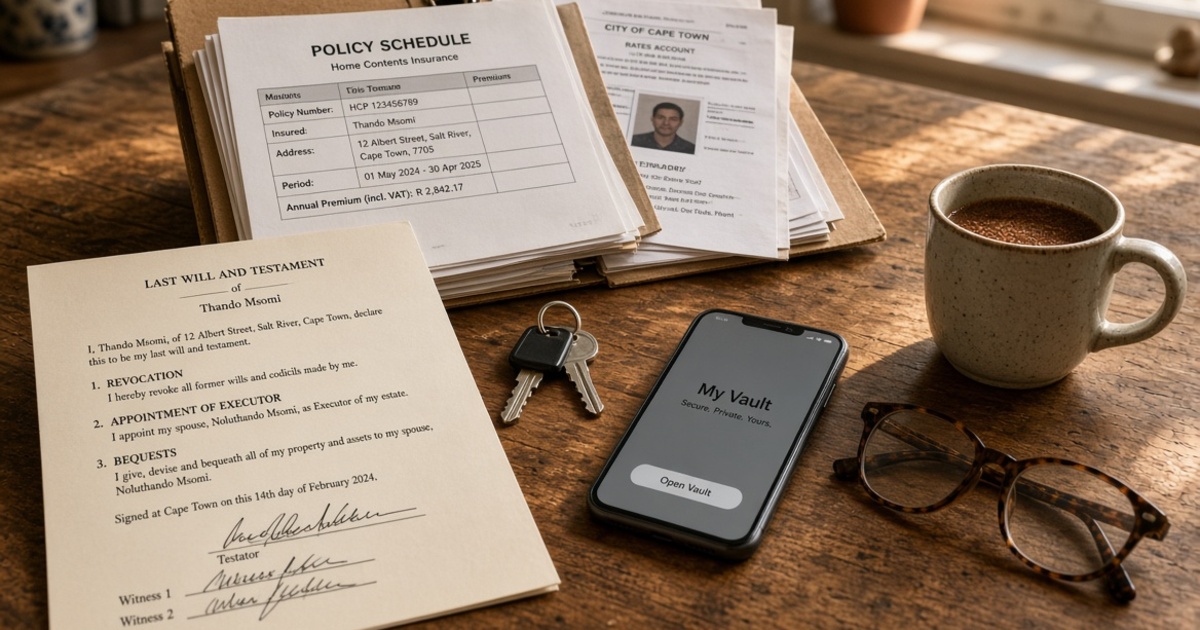
National Wills Week closed on 18 September 2026. From the 14th, participating attorneys offered a basic will at no charge. On the 15th the Minister of Justice launched the week in Bushbuckridge by answering a question that still stops people: why bother if all you have is an RDP house? Because, she said, once you have passed on, some family members may come and remove your children from the house.
That is a good reason to sign. It is not the end of the work.
The same day the week closed, Capital Legacy put its Estate Readiness Index back in front of the public and launched a two-minute check built on those findings. The index itself is the firm’s first annual benchmark, published in August 2026. Researchers spoke to 1,000 South Africans aged 25 to 75 who had lost a loved one in the preceding five years, and set that against 1,761 estates the firm opened in 2025. South Africa scored 50 out of 100. Only 41% of those loved ones had a valid will. Among people who then lived through the process, 43% went and drafted their own.
Craig Harding, the firm’s CEO, put the gap in one sentence: a will is often the first step, but it is not the only one.
What the first three months actually look like
More than half of the people in that survey felt financial pressure after the death. Of those, 66% hit a cash shortage within three months. Sixty percent said the strain reached into ordinary days. Forty-two percent reported family conflict while the estate was being administered.
Those numbers are not about greed. Bond payments, school fees and funeral costs do not pause for the Master. Banks freeze accounts when a death is reported. An executor who cannot find the life policy, the funeral cover, the EasyEquities login or the medical aid number is working from a blank page.
People also misread the clock. More than half of the respondents expected the estate to wrap up in under six months. Only 28% saw that happen.
A signed will tells the Master who should act. It does not hand that person the file.
The file the will cannot be
South African wills still have to be paper. They are signed in wet ink, with two competent witnesses, because the Wills Act requires writing and a handwritten signature, and the Electronic Communications and Transactions Act does not cover wills. Once that original is lodged with the Master after death, section 5 of the Administration of Estates Act lets any person inspect the file during office hours and take a copy, on payment of the fee. That is why passwords, seed phrases and PINs do not belong in the clauses.
So the will does two useful jobs. It appoints an executor. It can say that a separate inventory exists. The working details have to live somewhere else: the policy numbers, the SARS eFiling profile, the title deed scan, the medical history a first responder might need, the hardware wallet in the desk drawer.
Call that somewhere a Digital Legacy Binder. Lawyers have long used a sealed memorandum for the same split. The modern version, for a life that already sits on a phone, is an encrypted digital vault that holds the map next to the paper will that only points at it.
What belongs in the binder
Keep the list honest. The executor does not need every streaming password on day one. They do need to know what exists.
ID records: the smart ID, passport, marriage certificate, the children’s birth certificates. Financial records: bank and investment platforms, retirement annuities, the policy that is supposed to pay the bond. Medical records: the scheme name, chronic medication, the living will if you have one. Login records for the accounts that freeze first. Crypto Wallet records if you hold coins anywhere an exchange cannot reset for a death certificate. Other: the lease, the company share register, the letter that says where the original will is kept.
Vaultneur is built as that binder. Documents and records are encrypted on the device before they leave it, which is on-device envelope encryption in plain language: each file gets its own AES-256-GCM data key, and that key is wrapped by a master key derived from your passphrase. Vaultneur holds no key that can open a vault. That is what zero-knowledge encryption means here. The company cannot read what you store.
You can share selected records through Family Vault, using a separate wrap for each recipient. Emergency QR can show chosen fields such as blood type, allergies and ICE contacts without unlocking the rest. Legacy Vault Release is optional and off by default. Nominate an heir, set a check-in of 30 to 90 days, and if you go silent, access moves through a physical Legacy Card and a claim code Vaultneur never sees.
One limit has to stay in the family conversation. There is no password reset. A forgotten passphrase means the vault is gone, for you and for Vaultneur. Treat that passphrase the way you treat the location of the signed will.
Do this before the week fades
If you used Wills Week, put the original in a place one other person can name out loud. If you did not, the Law Society list and a local attorney are still there in ordinary weeks. A free basic will is a start. An attorney can tell you whether yours needs a guardian clause, a special bequest or a look at a business share.
On the same afternoon, make the inventory on your phone. Platform names. Where the paper file lives. Who already knows part of the picture. Point the will at that binder in one short clause. Do not paste the secrets into the clause.
Then leave the tax and the winding-up to someone qualified. Estate duty, cash in the estate and how long the Master will take are questions for an attorney or a fiduciary practitioner, not for a Saturday blog post.
National Wills Week exists because too many families still inherit a fight and an empty drawer. The will names the person who should act. The Digital Legacy Binder is how that person finds the file.